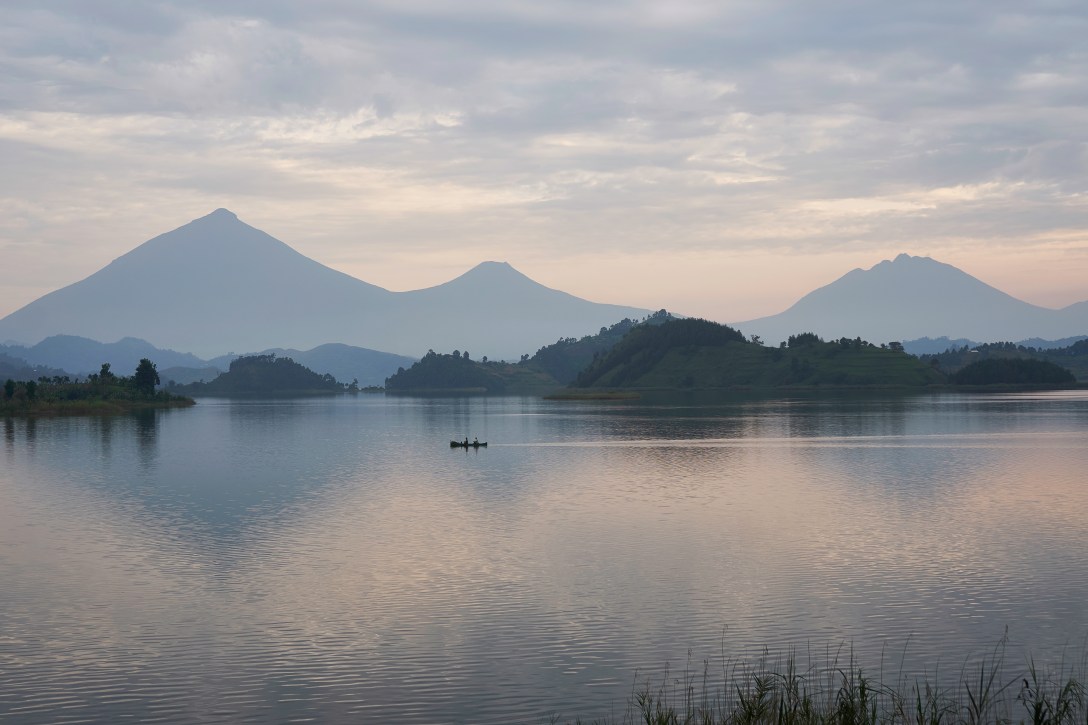
Back in 2019 I travelled to Uganda with two friends – read my retrospect here. It was a magnificent trip to a country which many most probably do not know very well. As my retrospect only covers my trip, I thought it would be nice to have a deeper look into Ugandan tourism. That is why I interviewed Hamidah, who organized our trip, and Arshley, who did an amazing job in guiding it.
Simon: Briefly introduce yourself. How did you become a tour guide?
Arshley: I am Arshley Brian, a Uganda based tour guide, an Ornithologist, Botanist, Zoologist who has a bachelor’s degree in Tourism Operation and Forestry from the International University of East Africa. My journey to becoming a tour guide was highly motivated and attentionally paid by my father Mr Baboibeki Stephen who has been a guide for over 30 years. He put in all his efforts in training me different tourism related things just as I also put in my emphasis to see that I could truly, truly be an outstanding tour guide.
Hamidah: I am Hamidah Nakato Kimera, a female tourist guide/organizer based in Uganda. I handle all kinds of trips from single travelers to groups. I picked interest in this industry from my dad ever since I was 12 years of age. And then I was lucky to pursue my diploma in tourism at one of the two government institutes in Uganda that is the hotel and tourism training institute. Then I did my internship at the Uganda Wildlife Education Centre, the biggest zoo in Africa, where I worked very close with wild animals. And I also worked in the education department where I could educate different levels of people from single travelers to institutions and universities. Then I finally wanted to widen on my career. That is when I did different trainings within the national parks of Uganda with the Uganda Safari Guides Association. And here I am now, guiding and organizing trips from North to South, East to West, part of both, Uganda and Rwanda.
Simon: When I travelled Uganda with Arshley, I noticed that different languages were spoken in some of the regions we visited. How many languages do you speak and how are they called?
Arshley: Relating to this, the country has 56 different tribes. Every region has different tribes speaking among them, I am glad to say that I speak 15 local languages from around the country and at least four languages from every region. I.e.: Luganda, Swahili, Lusoga, Lunyole, Lugungu, Runyakole, Rukiiga, Kiruli, Acholi,Luo, Rutooro, Itesot, Rugwere, Kjong (which is one of the hardest languages), Runyoro (which is my tribe)
Hamidah: As of me I speak four different languages and that’s Luganda, Lusoga, Runyankole and Rukiga. But as Ashley mentioned, we have over 52 and one that is not even documented called the IK which is found in the far northern part of Uganda.
Simon: Africa is a big continent and quite a few countries offer safari experiences. Why should someone choose to visit East Africa and especially Uganda?
Arshley: Uganda still distinguishes itself as Africa’s most hospitable country which I feel wins the clients confidence to visit. Then Uganda being the true Pearl of Africa with its outstanding beauty, e.g. the source of the world’s longest river, world’s largest caldera (Mount Elgon), big natural forests, world’s most powerful falls (Murchison Falls National Park) and above all the virgin beauty we still have in the bird life – we have 50% of Africa’s bird species.
Hamidah: Reason to why someone would choose to travel to begin with East Africa
- We all have the same official language which is English because we all fall under the East African community.
- East Africa is located at the coast of the Indian Ocean – that’s for the case of Zanzibar
- The connection between East African countries in terms of road, including visa processing which you can even access on arrival.
- In terms of wildlife or scenery and culture we have some similarities and differences which make it unique and worth to visit each country. For example Uganda is more known for chimpanzees and gorillas, Kenya is known for the gigantic migration of beasts that happens between June and July and Tanzania is known for Kilimanjaro, good number of animals in terms of population and Diane beaches which are at the coast.
But why would someone choose Uganda is because of the following.
- We have a summary of Africa, hence the word the Pearl of Africa. E.g. we have almost all different types of vegetation and climate found almost in all parts of Africa just in a one small country.
- We are located around the equator. Meaning the weather is fabulous where it can rain and dry at any time because of forests, lakes and mountains that favor different kinds of climate.
- We have plenty of food where you can be served food from the garden to your plate and this favors all kinds of people. Vegans and non-vegetarians.
- We are very hospitable – we hold the highest number of refugees in all of Africa if not the whole world.
- We have easy modes of communication to the extent that even if you are in a remote area and you have Wi-Fi you can still access the internet.
- Of course in terms of nature we have different landforms like mountains, crater lakes, tropical forests etc. All these inhabit different species of animals like gorillas, chimpanzees, lions, leopard, birds, reptiles, etc.
Simon: It is a hard choice, but which area of Uganda do you like best? Personally, I lost my heart in the border triangle Uganda/Rwanda/Congo with its beautiful landscape and the wide forests.
Arshley: Without doubt every spot in Uganda is so beautiful and rewarding, be it culture-wise, nature-wise, topography-wise Uganda is beautiful. But I truly find Murchison Falls (Uganda’s largest protected area) being my heart catcher with an area over 3000+ square kilometers bisected by the world’s largest river, engulfed by one of Africa’s oldest tropical rainforests (Budongo Forest) with outstanding wonders of the whole River Nile forcing itself through a seven meter gorge and above all with abundant wildlife summarized with the diverse history attached to this park, I truly find it being my favorite of Uganda’s most heart catching spots to visit.
Hamdiah: My best part of the country is South Western Uganda. Same as yours. I love landscape and nature with wildlife and this combines it all.
Simon: Talking about the stunningly beautiful Murchison Falls National Park, we noticed that a few areas within the park are a subject to oil exploration. What is the current status of this project? Do you believe that wildlife protection and oil exploration can go hand-in-hand?
Arshley: Well the current situation is heart-breaking because they are putting tarmac in the whole road that goes through the park, however they tell us that this project is not a life-time project, that after the oil is got out, the park shall be restored. However some of the animals have been translocated to other protected areas like Kidepo Valley National Park and Pian-Upe game reserve which they are yet to promote to a national park, so we feel by doing this move we can promote other places, too.
But the current situation is worrying and nagging because some animals are really stressed and they seem to also keep hiding away. In the past it was easy seeing the rare Bohors reedbuck feeding within kobs, which is now very, very hard to see, unless when you go on a serious search (you remember how many Bohors reedbucks we saw with you) while on the game drive.
Hamidah: True. In all parts of the world, human involvement onto the nature has always caused damage but all will be well because we have some people in power who understand the value of conservation.
Simon: How does the Covid-19 pandemic affect your work? I recently read a newspaper report which stated that the lack of tourists and henceforth the lack of income might possibly lead to an increase in illegal poaching and wood clearing. Do you believe that this is a real risk?
Arshley: Covid-19 has been my biggest blow as a guide throughout my whole life and my career as a tour guide. We have been hit by many things in the past, e.g. the deadly Ebola in the early 2000s and the Lord Resistance Army in the 90s and early 2000s. However, I didn’t feel this impact since I was so young, but this pandemic lets us feel the sourness of the grapes because all our trips have been cancelled since the lockdown to August. We are still not sure when the situation will come back to normal. However this has not given poachers and other destroyers a chance to get access to illegal deforestation and poaching because all the Uganda Wildlife workers still remain in these parks to always patrol the forests, and other wildlife. I keep chatting with a few of the gorilla and chimp rangers and they tell me they are always patrolling these parks and the endangered animals are in good health. So as much as we may be affected as guides for not getting tourists, I am so happy and glad that our animals and other protected areas are being watched over, thanks to the dedicated efforts of Uganda Wildlife Authority.
Hamidah: Unfortunately, we have been affected negatively because no one is allowed to travel, so lots of trips were cancelled and others were postponed. The worst part of it is that even if it ends, Uganda will still be affected because our source of business comes from the countries hit most by corona, which includes Germany. However I don’t believe it’s a risk because Uganda Wildlife Authority, the organization that is in charge of safe guarding all the national parks, is still operating. So we are still very positive.
Simon: Although my time in Uganda was limited, I can immediately remember a couple of incredible animal encounters – ranging from a hippo in front of the lodge bungalow to a forest elephant in Bwindi Impenetrable Forest. Please tell me the story of one of your most impressive wildlife encounters.
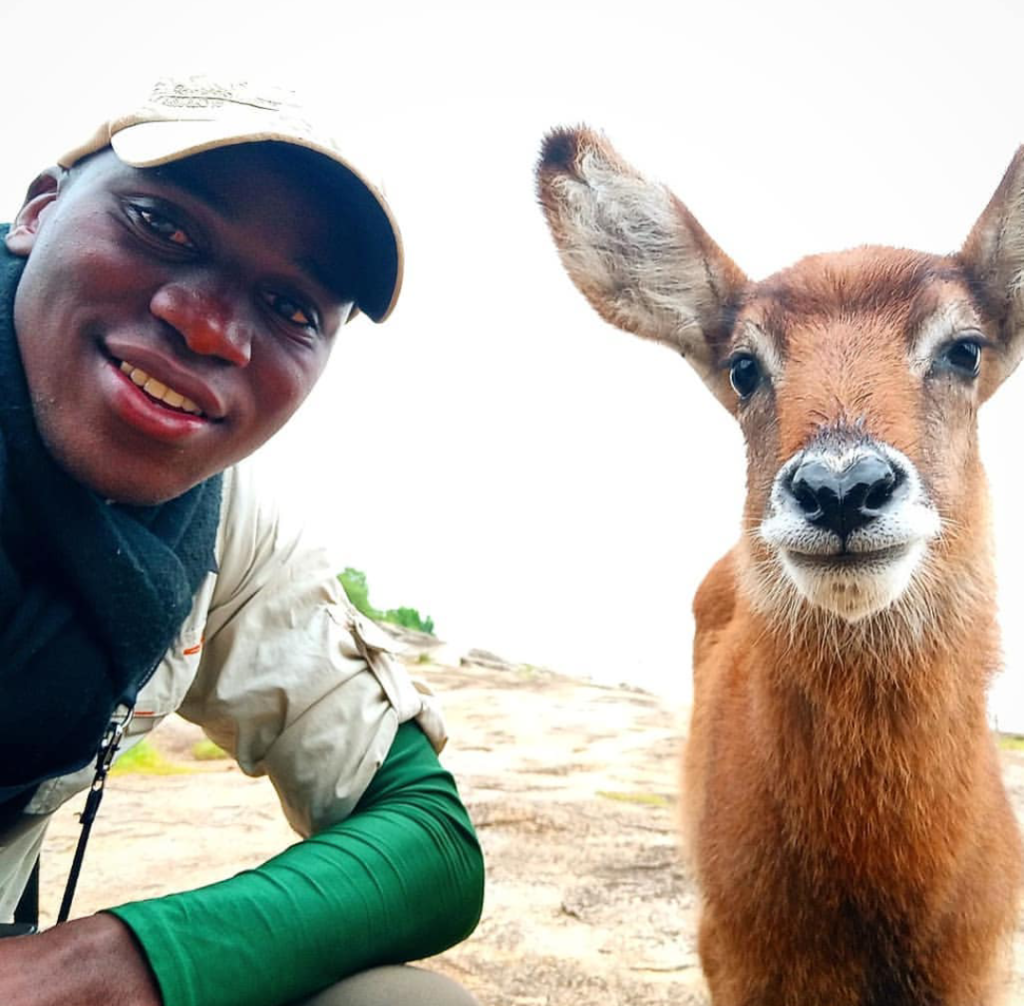
Arshley: We always have many encounters and great moments we get while on trips. But my biggest and most outstanding one was when we were bird watching in Lake Mburo National Park and from a distance we had something shaking in the thickets. My two clients immediately ran away but I stood firm to see what would come out of the thickets, after a few seconds a defassa waterbuck walks out of the thicket straight to where I was, giving me a chance to even get my phone and take a selfie with it. Minutes later the clients were also approaching to get a selfie with it, but the little animal walked off back to the thickets 😂😂 I claimed the day with that mega huge surprise.
Hamidah: I was in Murchison Falls National Park and I saw a bird (Martial Eagle) carrying away an antelope called an Oribi.
Simon: Next to amazing wildlife encounters, I bet that you have plenty of great memories with clients. Do you mind sharing a short story which comes to your mind immediately?
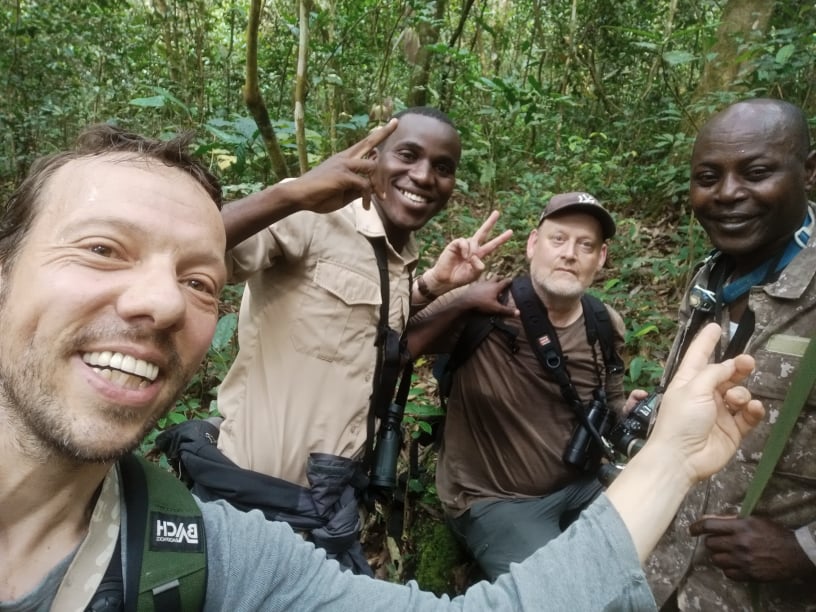
Arshley: My encounter was about the bird watching trip I conducted with the two Dutch clients. Their main target was the green-breasted pitta (Kibales Rare Bird) which we had missed on the second last day of the trip. I told them we should try to go back to the forest on the last day of the trip before driving to the airport. We went for hours without seeing the main target of the trip and on the last minute before we could drive off we tried one last spot where I had seen this bird before. When getting there, I found two of these birds feeding on the ground. The clients were so, so happy and even performed a 30 seconds dance. That has been my best outstanding moment with clients.
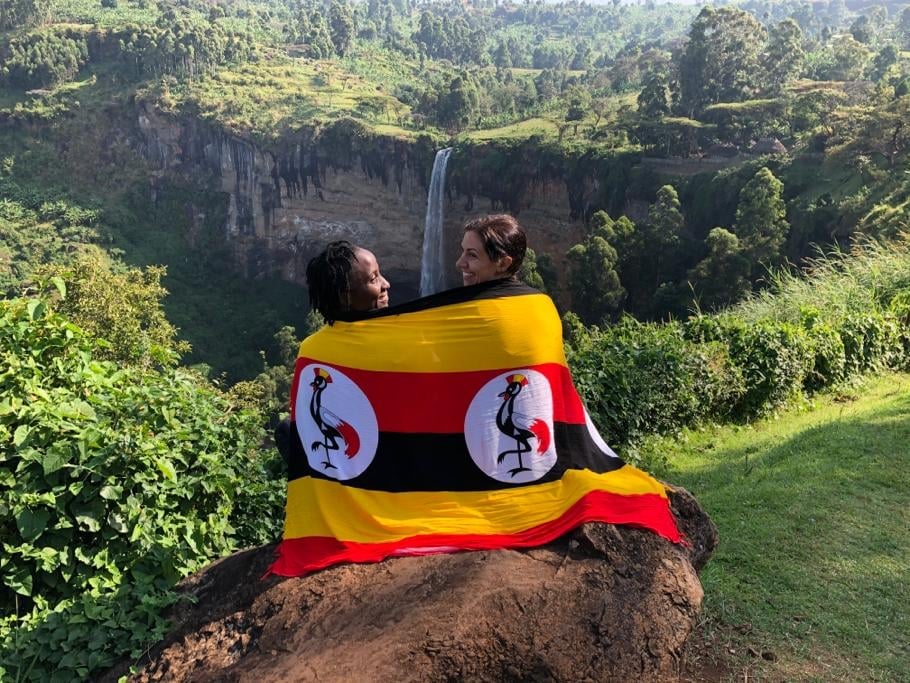
Hamidah: Mine was on a nature tour that I organized and I took this client to one of the falls that are in the eastern part of Uganda. She loved the falls to an extent that she visits those falls every January of the year for now three years.
Hamidah: May I ask you a question? What do Germans think about Uganda?
Simon: Well, that is a very difficult question. As all countries, Germany is very versatile and so is the knowledge and thinking about Uganda. I think in general, German people learn a lot about foreign countries, in school as well as from newspapers and television. However, all of this is very much focused on neighbouring countries and countries which are of great economical, political and/or historical importance to Germany. When it comes to Africa, detailed knowledge is probably limited. From a touristic point of view, most people who actually visited an African country (which is already a very limited group) probably only explored the northern and southern African countries (e.g. Morocco, Egypt, South Africa, Namibia). Another issue is outdated knowledge. All/most African countries are developing countries and it is a matter of fact that many things develop fast and well: things like the gross domestic product, infrastructure but also environmental and animal protection. So many things people may recall from school might be completely different today and for sure will be tomorrow. Next to that, Africa is an extremely large, versatile continent and people all around the world tend to generalize, which is a big issue, too. Ebola outbreaks in Congo, armed conflicts in Mali – both are absolutely horrible but are not at all related to a country like Uganda. When it comes to Uganda specifically, older people might remember things like the plane kidnapping which was resolved in Entebbe where German terrorists where involved. To be honest, I wonder about how someone from France, Belgium or the UK would answer your question. I would hope that the average knowledge is much better due to the connected history of several countries, but unfortunately I do not really believe so. Personally, I had the luck to visit many more unknown countries all around the world. The reason why I share memories and pictures is not to brag with my trips but to highlight that the world is a fascinating and beautiful place worth to be discovered. And about one thing I am completely sure: We are more alike than many people assume – independent from religion, skin colour and occupation. If there is only one person out there who considers to visit Uganda after this conversation, it was a big success and the world will be a better place.
Hamidah: And when you visited Uganda, what was the most surprising thing for you?
Simon: Looking at this question, two things directly came to my mind:
- Initially, we wanted to visit Uganda because of the possibility to see chimpanzees and of course gorillas. Frankly speaking, we had no detailed idea about what else to expect. Discussing our travel itinerary with you Hamidah, we got very excited for the trip as we realized that Uganda is in many ways a „summary of Africa“. Next to the apes, we had the chance to see many other animals like lions, crocodiles and hippos. And next to rain forests, we saw one of the world’s biggest lakes (Lake Victoria) and one of the sources of the world’s longest river (Nile) and of course the river itself. Uganda is incredibly diverse on a comparably small scale. Having this diversity of wildlife and nature, the mix of car safaris, boat safaris and great hikes through the rain forests was really great.
- Secondly, I was surprised by the excellent Indian kitchen you guys have in Uganda! I surely did not expect to enjoy a delicious Indian curry in the middle of Kampala. Thanks to old Empire connections, you can probably have more original Indian food in Uganda than in Germany.
Simon: When I explored Uganda, I noticed the incredible ability of many people to trace and spot animals. Arshley once saw a little chameleon on the street out of the driving car. Another time he spotted lions in a tree which were barely visible at all. Many rangers had incredible skills in tracking animals, even being able to communicate with plenty of animals like gorillas and birds. Sometimes, those abilities seriously seemed to be closer to magic than skill. Dou you believe that this talent is something you are born with or is it more related to years of training from childhood onwards?
Arshley: Well answering this question for me, I feel it all drives me back to instincts, and constant attention to wildlife. Looking at a game drive, it does not only mean to look for big game, but every time you go out for a game drive then attention should be paid from the smallest thing that your eyes can see to the largest. Secondly, training helps a lot, especially if you bond with nature because you have to learn the wildlife and its environment, how they react, how they grow, how they appear once encountered. So trying to see the invisible takes me to instincts because I will interpret that some wildlife would use any thicket to hide and that is where my instincts will drive me to.
Hamdiah: Brian is right but also passion and skill plus wide scope of knowledge – all these contribute.
Simon: For the car enthusiasts out there: What is the ultimate safari car and why?
Arshley: The cars are always determined by the number of clients and the terrain of where you will be visiting. But for one to seven passengers, I would recommend a four-wheel drive Land Cruiser because of its strength to get you out of every hard condition and it is so, so comfortable.
Hamdiah: The best car for a safari should be a 4×4 Land Cruiser that is customized for safari because of our terrains. But even other cars can work according to client’s interests.
Simon: We talked about current challenges, let us talk about good news. The gorilla population is on the rise and thanks to the Ziwa Rhino Sancturay, rhinos might have a true wildlife comeback. Can you share some more good wildlife news from Uganda?
Arshley: Yes, indeed, some species are bouncing back to a good population and thanks to Nature Uganda and other conservation organizations; we boost these efforts from vegetation to wildlife. In the past Mgahinga National Park was encroached in the early 70s and 80s. But in the 90s, the conservation took over and the park’s vegetation was restored and truly maintained. The Fox’s Weaver was believed at one point to be extinct and under Nature Uganda I was part of one of the five teams that were chosen to go search for this bird. I am glad to say that on our first visit we saw 19 individuals with fresh nests. The last time we went there, there were over 60 individuals which shows that these birds are bouncing back. Another example is the stripe-breasted tit, one of the most endangered birds endemic in the Albertine Rift, which is being bred at Bwindi Forest National Park. They are doing well, so you can see that at least a few of those examples can prove that Uganda’s wildlife population has increased and this has been effective through sensitizing the community, working hand-in-hand with the surrounding community, fighting poachers and orienting them to an extent of converting them to work with Wildlife and above all giving back to the community part of what the government gets from tourism, e.g. like the park entry and activities you pay for when you come to visit.
Simon: I think these very positive and promising words are a great end to our conversation. Himidah, Arshley, thank you very much for giving insights into Uganda’s heart and soul. May the wildlife continue flourish. To put it like Arshley on our trip though in Uganda: In my language they say dankeschön.
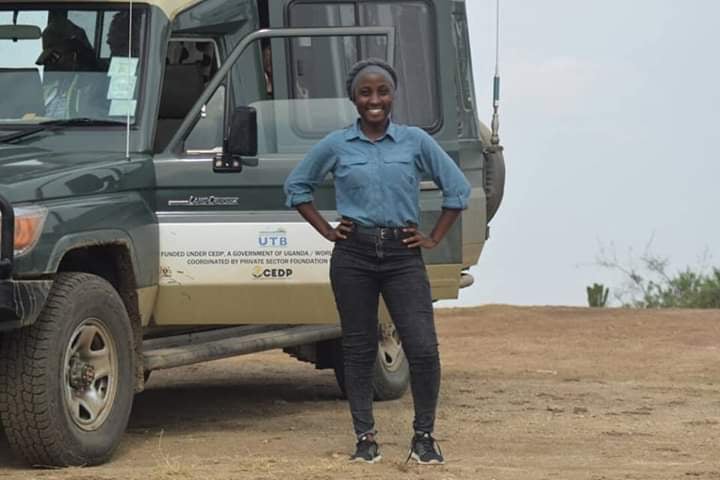
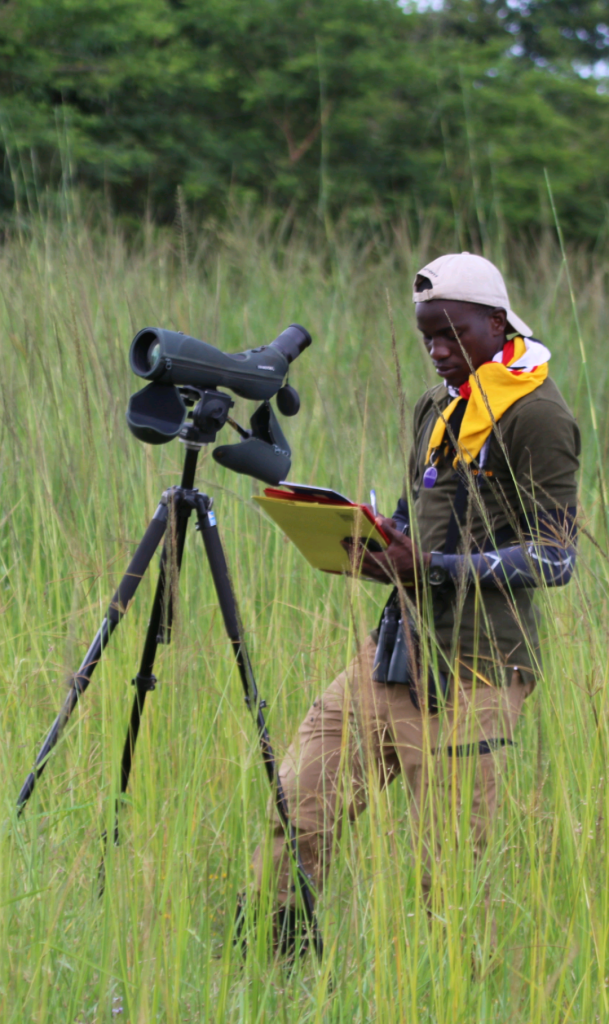
Looking for your own East African adventure? I will be happy to answer your questions about Uganda and to connect you with Hamidah and Arshley.

 @sebel_tours