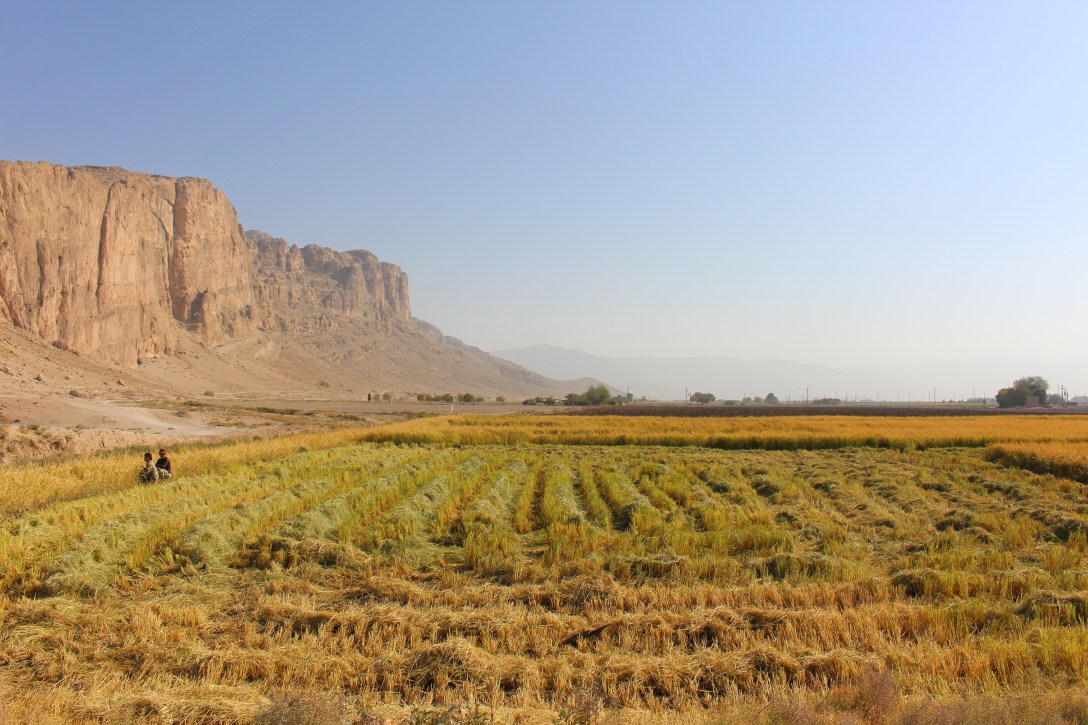
Of all of my trips around the globe, the one to Iran probably impressed me most. Iran has been producing bad or at least questionable headlines for years. But back in 2016, I wondered if a country with a population of more than 80 million and with a history of a few thousand years, can be evil to the core. What was there to expect on-top of magnificent historic sights? Already in the very first hours I found something much better: an incredible hospitality. I met countless people who did everything for my well-being and who were very interested in me and the world I came from. In other words, I met countless open-minded people: young and old, male and female, liberal and conservative. Back then, shortly after the international community found an agreement on Iran’s nuclear program, the country felt like being in a giant awakening. That awakening found an abrupt ending when Donald Trump became the 45th president of the United States of America. Now, with the new Biden administration in power, things will eventually change again. My Iran visit taught me, that a generalization of things can lead to a totally incomplete picture. This does of course not mean that I am fine with many of the things Iran has been involved in. But I do wonder if isolating and punishing such a diverse population is a good and human way of forcing change. And I do wonder what kind of change this will eventually trigger. If we as the western world refuse the dialogue, others will eventually step in.
Talking about dialogue, I am very happy to present you an interview with the tour guide of my trip to Iran, Nima. We talk about him and how he is coping with the current pandemic, Iran’s many sights in terms of nature and culture and Iran’s society. Enjoy reading it!
Hello Nima! To start our conversation, I would like to ask you to briefly introduce yourself. How did you become a tour guide?
Nima: My name is Nima Alizadeh, I am 42 years old and I was born in Teheran. Back in the day, I used to live in Germany for a couple of years. But I returned to Iran 25 years ago. Five years after my return, an uncle, who has been successfully working as a tour guide, suggested me to become a tour guide myself. I love my job ever since then. Even after 20 years, being a tour guide is something special. Despite having obtained a MBA and a PhD, I want to continue to work in the tourism industry.
I visited Iran in 2016. One of my first discoveries was to see how friendly Iran’s inhabitants were. Many fellow travellers report that the friendliness encountered in Iran, cannot be found anywhere else. What is the secret of this incredible hospitality?
Nima: Iranians are known for their hospitality – not only to foreign tourists, also to local tourists. One of the main reasons is that Iran often has a negative perception in western media and has been affected by sanctions for decades. For us, it is important to show foreign tourists that there is also a different side to Iran. For us, tourists are the best ambassadors.
On top of that, your trip was very special and different from many other trips as you were travelling with a group of young Europeans which was an event by itself.
True. Back then you told us that before the international community agreed on Iran’s nuclear program (2015), a limited amount of tourists visited the country and most of them were beyond their thirties. If I remember correctly, we were the first young group for you personally. Why was that the case?
Nima: Yes, that’s correct. Generally speaking, the tourism is heavily affected by the political situation. In the last twenty years, we experienced 9/11, the wars in Iraq and Afghanistan and of course the many terror attacks from ISIS. All of this affected the tourism in Iran, although Iran was not involved in any of those events.
While the perception might have been different, Iran itself has been a safe country and a safe destination for tourists. The reason why the age average of tourists used to be relatively high, is probably related to the fact that Iran is recognized as a destination for cultural tourism. On top of that, our Islamic laws might specifically distract younger tourists.
Yet, when the international community agreed on the nuclear program in 2015, a great blossom started for our tourism industry. There were many more tourists and also more and more young tourists. Iran features many highlights in nature, culture and society, the country is highly interesting to all age groups.
Before we look into what Iran has in store for tourists in terms of nature and culture, I would like to ask one more question about its society. The age average of tourists might have been comparably high a few years ago, but Iran’s population is the opposite: quite young. One thing both groups might have in common is a high level of education. Can you give us some insights please?
Nima: Yes, Iran indeed is a very young country. The population grew especially in the last 40 years. During the time of the Islamic revolution, Iran used to have 40 million inhabitants – today there are 85 million of us. Our population is as big as Germany’s. 30 million, more than a third of the country’s population, is younger than 18 years. Iranians are eager to achieve something in life, and for that, they need a university degree. Hence, many people obtain a university degree. This applies to women and men equally.
From an ethnical point of view, most Iranians have an Indo-Germanic origin, which differentiates Iran from the Arabic world. Yet, Iran is still a multi-ethnic state. There are several population groups next to the Persian one, e.g. Turks, Kurds, Baluchi and Arabs. Consequently, one of Iran’s attractions is to be able to find a lot of different traditions and religions. Many of those can be experienced already within two weeks of visiting the country.
I would like to follow-up on the topic of religions and traditions. First and foremost, Iran is shaped by Shiism. Yet, as you mentioned, there are different religions, too. When I visited Iran, I was quite amazed to learn about the Zoroastrians, who are still existent, as their roots date back to times before Judaism, Christianity and Islam. Yet, they believe, unlike most other old religions, in one god. Can you give us a short insight into what Zoroastrian places visitors can explore when in Iran?
Nima: Approximately from 550 B.C. to 642 A.C., Iran used to be a Zoroastrian country. Today, around 120.000 Zoroastrians still live in Iran and the province of Yazd is the center of their religion. There, tourists can visit a Fire Temple as well as the Towers of Silence. Zoroastrians have four holy elements: water, fire, air and earth. All of those cannot be contaminated by all means. The Zoroastrianism is a great example of Iran’s diversity of people, religions and cultures, all living peacefully together.
Yazd is a great keyword. As a desert city, heat and water shortage have been a formidable challenge. Which achievements of Persian engineers can be gazed at in Yazd? And how old are they?
Nima: Yazd was named UNESCO world heritage for its beautiful buildings and its historic district. It is Iran’s 24th UNESCO world heritage site. Yet, as you mentioned, Yazd is also famous for its wind catchers and the underground water channels, which we call GHANAT. They belong to the UNESCO world heritage, too. Both technical inventions are almost 3,000 years old and only with their help, Iranians were able to build large settlements in a desert. The wind catchers and water channels are still in use in the provinces of Yazd, Kerman and the island of Gheshm in the Persian Gulf. Agriculture still plays a role due to those incredibly old water channels.
Some might think that deserts are kind of boring, but I very well remember Yazd and its surroundings, especially the Kavir desert. Instead of being boring, I find deserts deeply fascinating and stunningly beautiful. Most of the places I visited were fairly dry. Yet, you can go even skiing in Iran. Can you give us details?
Nima: In terms of landscape, Iran is incredibly versatile: deserts, mountain ranges, the Caspian Sea, the Persian Gulf and the Gulf of Oman, which is a part of the Indian Ocean. In winter, we sometimes experience temperature deltas of 40 degrees Celsius between the north and the south of the country. When being in Teheran during winter, you have two big and modern skiing areas just one hour away by car. On the next day, you could take a plane to the island of Kish, located in the Persian Gulf, where you can enjoy beaches and watersports.
Today, Iran’s deserts are quite accessible to tourists: In recent years, many old caravanserai were refurbished. They are great places to spend a night. One of the most beautiful spots is the Dasht-e Lut, also known as the Lut Desert. It is one of the hottest places on earth and named UNESCO nature heritage.
Very interesting! When I look at a map of Iran, I can also see a small stripe of green in the north of the country, bordering the Caspian Sea. How can I imagine the landscape there? Can you recommend some places there?
Nima: Yes, correct. North of the Alborz mountain range, one of Iran’s two mountain ranges, offers a totally different climate. It is comparable to Europe: green, mostly tree-covered, lots of rain and 700 kilometers of sand beaches. It is a popular destination for domestic and Arabic tourists. Our company, Pasargad Tours, offers many different voyages through all parts of Iran.
As you already mentioned, Iran is, despite its beautiful and impressive nature, especially known as a cultural destination. Persepolis, known for its 2,500 year old Persian remains, is most certainly one of the great highlights of any Iran trip. Can you recommend us more highlights from the Persian Empire, once one of the largest empires in the world?
Nima: Iran has a long, century old history before its Islamic time started. Many remains of those centuries can still be visited. One impressive example would be the grave of Cyrus and his descendants, the kings of the Achaemenid dynasty (550-250 B.C.). They were followed by the Sassanid Empire (240 B.C. – 624 A.D.) of which we have leftovers in the form of mural reliefs and palaces. Many of those places can be found in the province of Fars where the beautiful town of Shiraz is located.
There are also very interesting remains from the prehistoric times (7,000 – 550 B.C.) which can be found in various museums.
I remember the graves of the Achaemenid dynasty. I found them even more impressive than Persepolis itself. When talking about impressive structures, I finally have to ask you to give us some insights about the glorious Islamic buildings which can be found in pretty much all of Iran. What are the greatest highlights?
Nima: A typical trip to Iran takes 14 days and leads through the cities of Kerman, Shiraz, Yazd, Isfahan, Kashan and Teheran. Many sights can be seen in all of those cities. A few examples:
- In Isfahan, visitors find an immense square from the 16th century bordered by magnificent mosques and palaces.
- Shiraz offers, next to its proximity to Persepolis, the beautiful mausoleums of the poets Hafez and Saadi.
- Yazd is known for the already discussed highlights (wind catchers, underground water channels, historic city) and a mosque, which has the highest entry portal in all of Iran.
- In Teheran, visitors find a giant bazaar and the Golestan Palace, which was built in the 19th century.
We also offer tours which take only 10 days and visit the north-west of the country. More than six UNESCO world heritage sites are visited on such a trip. Among the highlights are the Takht-e Soleymān and the Sheikh Safi al-Din Khānegāh and Shrine Ensemble.
Iran is a must-see and one trip alone will not be enough to see it all.
Thank you very much! I have not seen all of those places, but those I saw were stunningly beautiful. Now I suffer from wanderlust 😉 Talking about travelling, we all know that it is currently not possible due to the Covid-19 pandemic. May I ask how you as a tour guide are doing during this horrible time?
Nima: Generally speaking, the level of tourism in Iran is very dependent on the political situation and the safety. As already mentioned, tourism boomed from 2016 onwards after the international community agreed on the nuclear program shortly before. The colleagues from the marketing department of our company, Pasargad Tours, had so many requests that they were not able to answer them all in time.
While the tension in international affairs grew during the presidency of Donald Trump, tourism continued on a good level. But with this horrible pandemic, travelling collapsed all around the world. I know many colleagues who now work in a different field in order to make a living. Personally, I give lectures at a university and work in the marketing department of our company. As usual for the first weeks of every year, we are at the moment busy preparing the big tourism fair in Berlin, ITB. The fair will be completely virtual this year and is scheduled for March.
Hopefully the vaccinations will allow us to travel and to return to normality again. We believe that the level of tourism will rise at the end of 2021 or at the beginning of 2022.
On-top of the pandemic, the Iranian economy has been significantly hit by the re-introduced sanctions. We learned that Iran’s population is, on average, young and well educated. How does the ongoing economic crisis affect the population?
Nima: Sanctions against Iran have a long history. A history, which already lasts 40 years. In my opinion, many measures taken by the United States against the Iranian economy are unreasonable and inhuman. One example are Iranian airlines. Since almost thirty years, they cannot purchase new planes or even spare parts. If Iranian passenger planes fly to Europe today, they cannot refuel the plane. Who is targeted by such measures? In many cases, this lead to the result that thousands of well-educated young people left the country in search for better perspectives. This really hurts. The sanctions affect first and foremost the normal people and especially the youth.
After the international community agreed on the nuclear program in 2015, many sanctions were lifted. There was a lot of buzz around investments from foreign companies in Iran, many young people hoped for interesting and well-paid job opportunities. Unfortunately, this period lasted only two years.
Thank you for giving us the opportunity to get such a diverse view on your home country. Is there anything left, which you would like to say?
Nima: First of all, I would like to thank you for this interview. I sincerely hope that this pandemic vanishes and that people around the world can travel again. Everyone, no matter if young or old, is invited to visit Iran. Do not let news headlines alone shape your picture of my country – you will be fascinated by the sights, the hospitality and the society. Please do not hesitate to contact me in case of further interest and questions. All the best!
The interview was taken in German and translated by me. January/February 2021
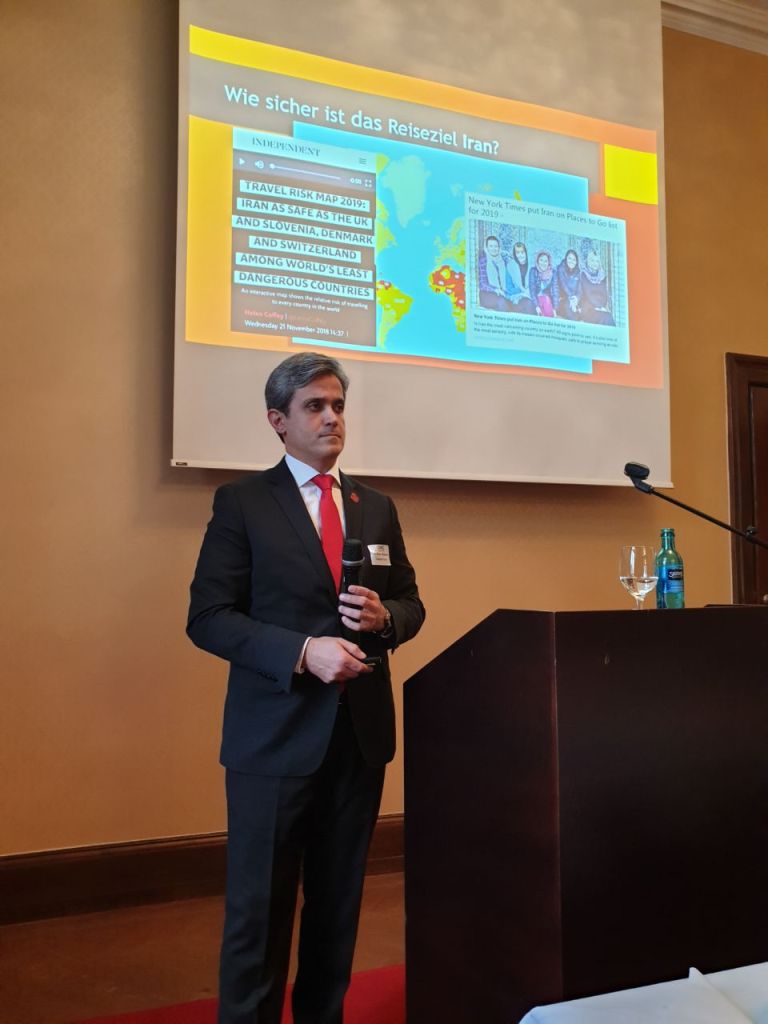
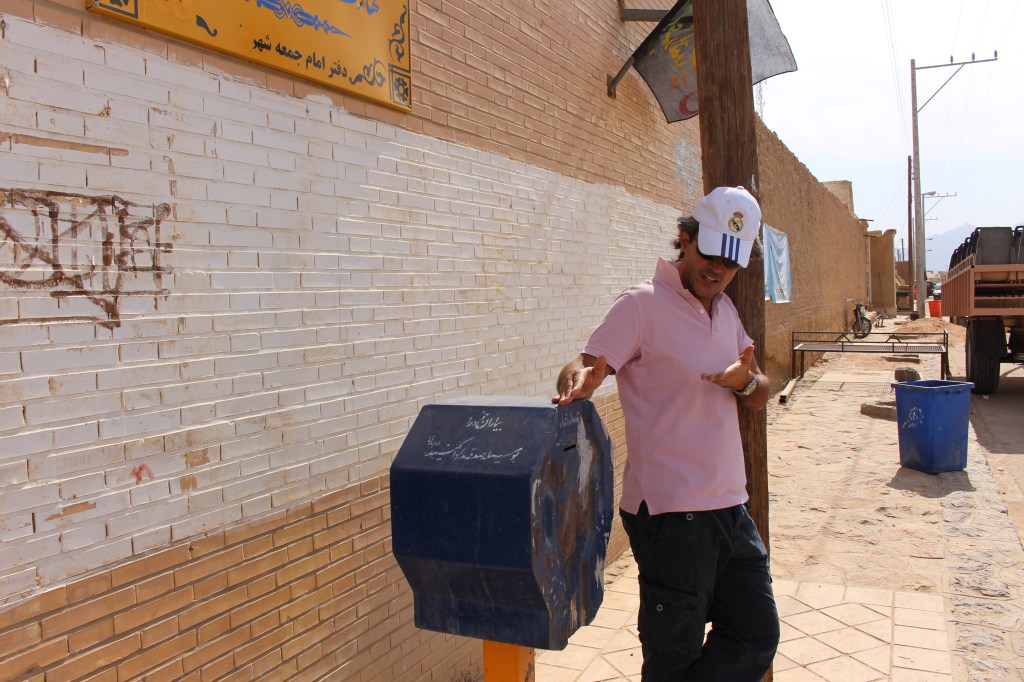
Looking for your own Iranian adventure? I will be happy to answer your questions about Iran and to connect you with Nima.

 @sebel_tours